

Updated November 12, 2026 · 10 min read
iPhone Fold Specs: Every iPhone Duo Spec Explained
Understand the iPhone Duo screens, cameras, battery claims, storage and everyday trade-offs without getting lost in technical terms.
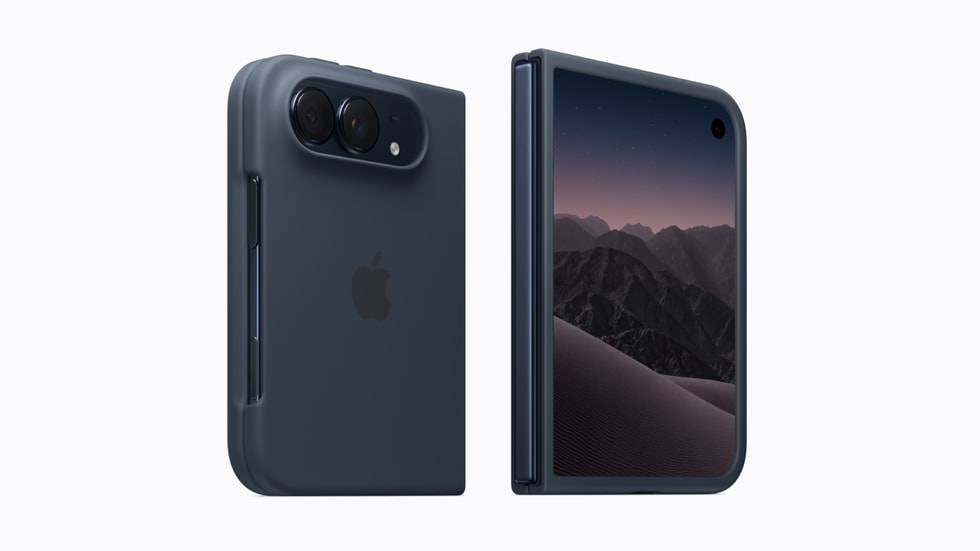
iPhone Fold specs at a glance
The iPhone Fold specs belong to a phone Apple officially calls iPhone Duo. Its central idea is simple: a smaller outside screen for quick tasks and a larger folding screen inside. The specification sheet explains what the hardware supports, but choosing one still means deciding whether opening the phone will improve things you do regularly.
Start with the numbers below, then read the qualifications. A maximum brightness figure is not the screen's brightness all day. A battery playback claim is not a promise about navigation, gaming or calls. Camera megapixels describe image resolution, not a complete verdict on photographs. The useful question is what each number means for your routine. Apple's technical specifications are the source for the hardware figures here.
| Displays | 7.6-inch inner OLED; 5.4-inch outer OLED |
|---|---|
| Refresh rate | Adaptive ProMotion up to 120Hz on both displays |
| Chip | A20 Pro |
| Storage | 256GB, 512GB, 1TB or 2TB |
| Rear cameras | 48MP Fusion Main and 48MP Fusion Ultra Wide |
| Front cameras | 12MP outer Center Stage; inner under-display FaceTime camera |
| Battery claim | Up to 24 hours of typical use |
| Security | Touch ID in the side button |
| Weight | 254 grams |
| Finishes | Night Sky and Star White |
Two screens, explained
The inner display measures 7.6 inches diagonally and has a resolution of 1878 by 2670 pixels at 430 pixels per inch. The outer display measures 5.4 inches, with 1398 by 2034 pixels at 460 pixels per inch. Both are Super Retina XDR OLED displays. Those pixel-density figures describe how closely the pixels are packed, rather than how much information an app must show.
For everyday buying, the more important difference is available space. Think about reading a document, viewing a map or inspecting a photo while open. Then think about replying to a short message while closed. Try both tasks with your preferred text size. A large display only earns its place if it makes something you actually do more comfortable.
What 120Hz and brightness mean
Both displays support ProMotion with adaptive refresh rates up to 120Hz. Refresh rate describes how often the display updates; “adaptive” means the rate can change rather than remaining at its maximum. Always-On display, HDR, True Tone and wide color are also listed for both screens. These are shared capabilities, not reasons to assume every app looks identical on the two panels.
Apple lists 1000 nits maximum typical brightness, 1600 nits peak HDR brightness and 3000 nits peak outdoor brightness, with a 1-nit minimum. Keep those categories separate. The highest figure does not describe every screen, scene or setting. The inner panel also has a nano-texture finish, which Apple says minimizes glare. If reflections bother you, inspect it under store lighting rather than judging from a product photograph.
Apple says both displays share the same aspect ratio, so content scales proportionally between them. That does not mean every app uses the extra space equally well. Check the apps that matter to you. Apple also lists support for Apple Pencil (USB-C); read the compatibility details before purchasing an accessory rather than assuming every Pencil model is supported.
Size, materials and protection
Closed, the body measures 117.8mm high, 84.1mm wide and 11.3mm deep. Open, it measures 117.8mm high, 164.6mm wide and 5.2mm deep. Weight is 254 grams in either position. Opening changes the shape you support, not the amount you carry. Our size and weight guide explains how to assess grip, pockets and two-handed use.
The construction includes grade 5 titanium, a mirror-polished enclosure and a hinge cover with a contrasting micro-blasted finish. Apple lists Ceramic Shield 2 on the front and Ceramic Shield on the back. Do not extend those names to every layer of the folding screen: Apple describes the inner display's protective construction separately. Materials are useful context, but they do not establish that the whole phone is scratch-proof.
The IP68 rating is stated as a maximum depth of 6 meters for up to 30 minutes under the specified laboratory standard. Treat it as a qualified resistance rating, not permission to ignore care instructions. Likewise, a hinge description is not an unlimited folding guarantee. For protection choices and fit, read our cases and screen protectors guide before adding accessories to your order.
Chip, storage and connections
The A20 Pro chip has a six-core CPU, made up of two super cores and four efficiency cores, plus a seven-core GPU with Neural Accelerators and a dual 16-core Neural Engine. Apple also lists hardware-accelerated ray tracing. In plain language, those are different processing resources for general tasks, graphics and supported machine-learning work. Core counts alone do not tell you how quickly your particular app will finish a job.
Apple describes a custom vapor chamber and dual-battery architecture as part of the design. That explains some of the engineering approach, but it is not an independent performance test. Avoid turning those details into a claim that demanding games never slow down or that the phone cannot become warm. A useful demonstration is your own workload, with the settings you expect to use.
Choose storage around what you keep
The four capacities are 256GB, 512GB, 1TB and 2TB. Before choosing, look at your current storage use and separate things you need offline from things you can remove or download again. Large video projects deserve particular attention. Our storage guide helps frame that decision without assuming everyone needs the highest capacity.
Wireless specifications include Apple's C2 cellular modem, 5G support, the N1 wireless networking chip, Wi-Fi 7 and Bluetooth 6. Those names describe supported technologies, not a guaranteed connection speed wherever you go. Coverage, network equipment and your service still matter. Apple lists Touch ID in the side button for fingerprint authentication; an inner FaceTime camera should not be read as a Face ID claim.
iPhone Fold camera: two rear lenses, several ways to shoot
The iPhone Fold camera system pairs a 48MP Fusion Main camera with a 48MP Fusion Ultra Wide. The main camera has a 26mm equivalent lens, an ƒ/1.6 aperture and sensor-shift optical image stabilization. The Ultra Wide has a 13mm equivalent lens, an ƒ/2.2 aperture and a 120-degree field of view. Think of these as a standard view and a much wider view, rather than two interchangeable versions of the same camera.
Understand the 2x option before counting cameras
The main camera also enables a 12MP optical-quality 2x Telephoto option at a 52mm equivalent focal length. That does not add a separate telephoto lens to the rear system. Apple's phrase “4x optical-quality zoom range” describes the range between the wide and closer framing options; it should not be mistaken for a dedicated 4x telephoto camera. Digital zoom is listed separately, up to 10x for photos.
If you mostly photograph people across a room, inspect that kind of framing before buying. If you photograph interiors, groups or landscapes, try the Ultra Wide instead. Do not judge either camera from megapixels alone. Light, subject movement, framing and processing all influence the photograph you keep. The specification sheet tells you which tools exist, not which picture you will prefer.
Selfies, calls and video
The outer front camera is a 12MP Center Stage camera with an ƒ/2.2 aperture. Inside, Apple lists an under-display FaceTime camera with an ƒ/1.8 aperture, Center Stage for video calls and Edge Light for calls. The supplied specifications do not state an inner-camera megapixel count, so there is no reason to invent one. Check the view you would actually use for work or family calls.
Rear video options include 4K Dolby Vision up to 120 frames per second on the Fusion Main camera. Cinematic mode reaches 4K Dolby Vision at 60 frames per second, while Action mode reaches 2.8K Dolby Vision at 60 frames per second. Those are mode-specific limits, not one setting available everywhere. The outer front camera supports 4K Dolby Vision up to 60 frames per second; the inner camera lists 1080p recording at 30 or 60.
Features also include Duo Preview, Smart Take, macro photography and Audio Mix. Treat the names as a starting point for a demonstration, not proof that every difficult shot becomes automatic. Ask to see the feature that interests you and check what it changes in the shooting process. That is more revealing than counting the number of features printed beneath “Camera.”
iPhone Fold battery life: read the test labels
Apple's iPhone Fold battery life claims differ by activity and screen. Typical use is listed as up to 24 hours. Video playback is up to 44 hours on the outer display or 31 hours on the inner display. Streamed video is up to 37 hours outside or 26 hours inside. These are separate claims; do not add them together or treat the longest result as a normal mixed-use day.
The distinction matters because choosing the folding screen is part of choosing this phone. If most of your planned use involves the inner display, the outer-display playback number is a poor headline for your decision. Equally, a streaming test does not describe continuous photography or navigation. Plan around your own mix of tasks, and leave room for days when charging is less convenient.
Charging claims also have conditions
Apple lists up to 50 percent charge in around 20 minutes with a 60W-capable adapter or higher and a USB-C charging cable. The adapter is available separately. Its MagSafe claim is up to 50 percent in around 30 minutes with a 35W adapter or higher paired with a MagSafe Charger; both are available separately. These describe specified setups, not every charger already in your drawer.
Before buying accessories, compare their exact ratings and compatibility with those requirements. Do not infer a full-charge time by simply doubling a half-charge figure. Also distinguish the adapter's stated capability from a claim that the phone constantly draws that amount of power. The practical goal is a reliable charging setup that fits your day, not the largest wattage printed on a box.
Which specs should guide your purchase?
Once you know what matters, compare iPhone Duo models, colors and prices with official product photography. Each configuration has its own detail page, keeping finish and capacity together.
Rank three priorities before looking at availability: how often you will open the screen, what you expect from the cameras, and how much you need to keep offline. Then check physical comfort. A specification advantage matters less if you dislike carrying or holding the phone. Our price guide helps put the configuration decision beside the cost.
- For reading and documents: test comfortable text size and app layouts while open.
- For photography: test the main, Ultra Wide and 2x framing you expect to use.
- For long days: consider your screen use and access to a compatible charger.
- For carrying: assess the closed width, weight and intended case together.
Finish is a separate preference; our color guide compares Night Sky and Star White without assigning unsupported performance differences. Once your essentials are settled, use live inventory to look for the right configuration. A stock listing is a reason to check Apple's checkout, not proof that a pickup order has been confirmed.
Choosing a size? See storage sizes and prices and color options.
Questions and answers
Is iPhone Fold officially called iPhone Duo?
Yes. Apple calls its foldable iPhone the iPhone Duo. This guide uses iPhone Fold for the search term and iPhone Duo for the product name.
How big are the iPhone Duo screens?
Apple lists a 7.6-inch inner folding OLED display and a 5.4-inch outer OLED display. These are diagonal measurements; actual viewable area is smaller because of the rounded corners.
Does the iPhone Fold camera have a separate telephoto lens?
Apple lists two rear cameras: a 48MP Fusion Main and a 48MP Fusion Ultra Wide. The main camera also enables a 12MP optical-quality 2x Telephoto option; that is not a third rear camera.
What is the iPhone Fold battery life?
Apple lists up to 24 hours of typical use. Its video playback claims are up to 44 hours on the outer display or 31 hours on the inner display. These are different test categories, not guaranteed everyday results.
Does iPhone Duo use Face ID or Touch ID?
Apple lists Touch ID in the side button. Do not mistake the inner FaceTime camera for a Face ID specification.
Which iPhone Duo storage sizes are available?
Apple lists 256GB, 512GB, 1TB and 2TB. Choose capacity around your apps, photos, downloads and recording habits rather than the largest number alone.
More answers about checks, alerts and plans are in the Produce Checker help and FAQ, and more guides are on the iPhone Duo stock blog.
Produce Checker is not affiliated with Apple Inc. Hardware details come from Apple's iPhone Duo technical specifications and announcement, checked November 12, 2026. Battery and charging figures are Apple's qualified claims, not guaranteed personal results. Stock and alerts are not guaranteed; Apple confirms pickup at checkout.