

Updated November 12, 2026 · 10 min read
iPhone Fold Reviews: What Reviewers Agree On
A cited roundup of published iPhone Duo reviews: the shared praise, recurring criticisms, and differences that matter before buying.
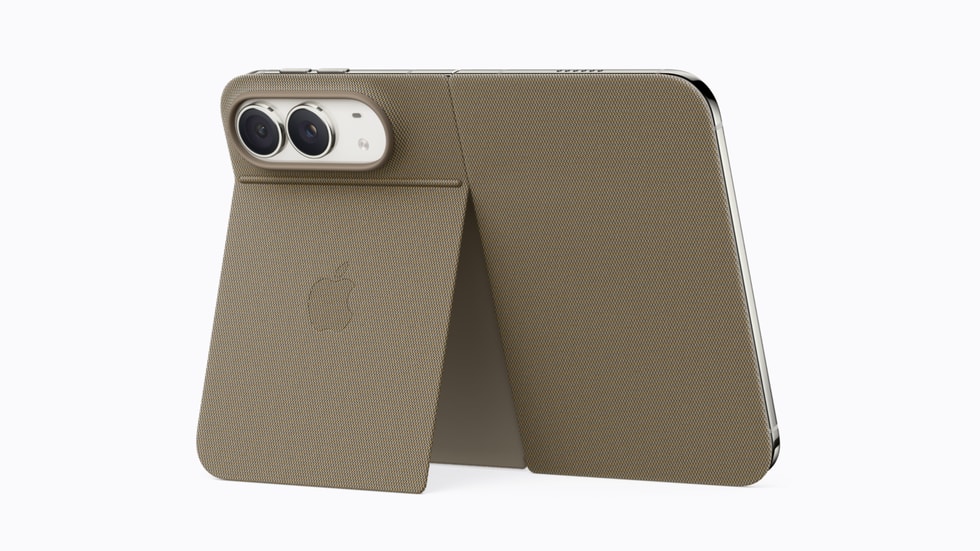
Which iPhone Fold reviews this roundup uses
The most useful iPhone Fold reviews are not the ones with the loudest verdict. They are the ones that explain what the reviewer actually did, which compromises mattered and how long the phone was used. Apple's foldable is officially called iPhone Duo, so that is the name attached to the published reviews discussed here. This is a source-based roundup, not our own hands-on test.
The main reviews are Mark Spoonauer's Tom's Guide review, updated October 27, 2026, and Nirave Gondhia's Android Central review, published November 4, 2026. Spoonauer describes a week using the phone as his daily driver; Gondhia describes two weeks of use. Both reach broadly positive conclusions while identifying limitations. All observations below are paraphrased, not invented quotations.
We also use Android Authority's October 22 reporting on independent folding tests as supporting durability evidence, clearly separated from those full reviews. Two enthusiastic reviews are not a survey of every owner, and agreement between them is not proof that every buyer will feel the same. For product basics before the verdicts, see our iPhone Fold overview and specifications guide.
The shared verdict: compelling, with real compromises
Tom's Guide's verdict centers on the quality of the design, the less distracting crease and useful split-screen multitasking. Spoonauer finds the device exciting and polished, but he repeatedly returns to uneven third-party app support and missing features he would expect at this price. His enthusiasm is grounded in the phone's ability to combine a compact device and a bigger working screen, not in a claim that it does everything best.
Android Central reaches a similarly positive but qualified conclusion from a different angle. Gondhia finds the phone difficult to put down despite choices he considers unnecessarily complicated. He places particular weight on Apple's developer ecosystem and the possibilities it opens, while acknowledging that app support and multitasking still have shortcomings. His review is optimistic about the experience, not a declaration that the first version has solved every foldable problem.
The practical overlap is clear: the Duo can be appealing even when its compromises are easy to name. That is useful for a buyer who already knows why a larger screen would help. It is less persuasive if your main question is simply whether an expensive new phone should have fewer omissions. Read these verdicts as explanations of a particular balance, not universal recommendations.
They agree the matte inner display is a highlight
Both reviewers respond positively to the nano-texture inner screen. Spoonauer finds that it cuts glare and makes the crease less prominent, particularly outdoors. Gondhia likes the texture for reading, scrolling and typing, and describes the crease as less distracting. These are closely aligned observations about everyday use, even though each reviewer gives different examples.
That agreement supports a narrow conclusion: the surface treatment is an important part of the experience, rather than a minor specification. It does not support calling the screen crease-free. Apple itself says the finish minimizes crease visibility. The manufacturer also lists a 7.6-inch inner screen and a 5.4-inch outer screen, giving context to the reviewers' comments about switching between phone-sized and larger-screen tasks.
They do not value every display quality equally
Spoonauer is more explicit about the visual trade-off. He finds the matte panel's colors and blacks less satisfying than those of a glossy rival display, despite appreciating reduced glare. Gondhia is especially enthusiastic about how the surface feels. Neither response cancels the other. A screen can be comfortable for reading yet less appealing to someone who prioritizes rich-looking video in a dim room.
Before buying, try content that matches your habits. Read an article, inspect a photograph and watch a familiar clip if a store permits it. Change the viewing angle and notice the center fold. You are not trying to choose which reviewer is right; you are finding out which of their priorities most closely matches yours. The same hardware can support different reasonable preferences.
They like the hinge, but feel is not a lifespan test
Both reviews praise a hinge that can hold the phone at many angles. Spoonauer describes enough friction to make different viewing positions useful, including tabletop and tent-style arrangements. Gondhia likewise lists the versatile hinge among the phone's strengths. The shared point is not simply that it opens and closes: supported positions can change how the screen is used during a normal day.
Apple describes a hinge with more than 100 components that supports the screen's center, along with internal reinforcement and a grade 5 titanium enclosure. That explains the engineering Apple wants buyers to notice. It remains a manufacturer account, separate from the reviewers' impressions of steadiness and finish. Our size and weight guide helps put the physical design in context.
A solid-feeling hinge over a week or two cannot establish years of reliability. Android Authority's reporting on Tim Pan's repeated-fold testing found a smooth-working hinge but a substantially deeper display crease. Its account of Joanna Stern's separate partial-fold test also described a sturdy hinge. Those findings add useful caution without turning the positive hands-on impressions into false claims.
If durability is your deciding factor, read our crease and durability guide. It distinguishes visual wear, hinge operation and reported screen faults. Those are related concerns, but they are not interchangeable. A successful stress test of one component does not prove that every part of every retail phone will remain unchanged throughout ownership.
They agree app support is uneven right now
The strongest shared warning concerns software that has not been adapted to the folding format. Tom's Guide finds optimized apps impressive but non-optimized apps disappointing. Android Central also lists apps needing foldable optimization among the drawbacks, even while praising the potential of Apple's developer ecosystem. The two reviews therefore agree on the present limitation more clearly than a quick glance at their positive verdicts might suggest.
This is where a buyer should replace general excitement with a short personal checklist. Name the apps that would justify opening the phone: perhaps a document reader, a messaging service or the tools you use for work. Look for evidence about those exact tasks. A polished demonstration in one app cannot tell you that a different service will use the extra space equally well.
Useful multitasking is not the same as unlimited multitasking
Spoonauer likes the intuitive split-screen experience and describes practical uses such as following a video while checking messages. Gondhia is more critical of multitasking limits compared with what he expects from foldables, while still seeing value in developer support. These are not necessarily conflicting factual claims. One reviewer is emphasizing ease for specific tasks; the other is asking for greater flexibility.
Do not buy on an assumption that every awkward app will be fixed quickly. Future improvement is possible, but neither review provides a timetable for every developer. Judge the published experience as evidence of what these reviewers encountered, then verify any app-specific requirement before spending money. If a single essential app is the reason you want the larger display, its current behavior deserves more weight than general optimism.
They agree cameras require a compromise
Both reviews identify photography as an area where buyers should manage expectations. Tom's Guide criticizes the absence of a dedicated telephoto camera and Face ID; Android Central lists cameras falling short of Pro-level expectations among its drawbacks. That is meaningful agreement about positioning, but not a reason to pretend every camera mode or every photograph disappointed both reviewers.
Apple lists a 48MP Fusion Main camera and a 48MP Fusion Ultra Wide, with a 12MP optical-quality 2x option enabled by the main camera. That last detail matters when reading complaints about telephoto hardware: a 2x option is not the same thing as a separate long-range lens. Apple's specifications also identify Touch ID in the side button.
If photographs are your priority, look beyond a review score. Examine the review's examples at the distances and in the lighting you use most often. Someone taking everyday pictures may judge this compromise differently from someone who relies on distant subjects. Equally, a preference for Face ID is personal but legitimate. The folding screen needs to deliver enough value to offset whichever missing features matter to you.
Battery, weight and value need individual judgment
Android Central explicitly lists excellent battery life among its strengths. That is an attributed reviewer judgment, not a shared measured result established by this roundup. Apple's own battery figures are separate manufacturer claims, with different video-playback estimates for the inner and outer displays. Do not combine those figures with one reviewer's experience and call the result an independent battery test.
Weight is another area where context matters. Tom's Guide calls the phone a bit heavy while still finding it easy to slip into a front jeans pocket. Android Central lists the design as surprisingly ergonomic. Both reactions can be true for the people describing them. Apple lists a weight of 254 grams, but a number alone cannot tell you whether the width, balance and grip suit your hands.
The same principle applies to value. A reviewer can love a device and still regard its price as a serious hurdle. Start with our price guide, then identify the tasks the larger screen would improve several times a week. If those tasks are rare, favorable reviews do not automatically make the premium sensible. If they are central to your routine, the compromises may be easier to accept.
Read the conclusion alongside the caveats
When returning to either review, read the criticism as carefully as the recommendation. A verdict reflects the reviewer's priorities and tolerance for compromises. Your essential app, preferred camera distance or comfort with a broad phone may change the balance. That does not make the review unhelpful; it gives you a better way to use its evidence without inheriting somebody else's preferences.
Turn the reviews into a buying decision
Start with three questions: will you regularly use the inner screen, do your essential apps work well in the format, and are the camera and authentication trade-offs acceptable? The positive reviews are most convincing when your answers are already clear. If you are hoping the hardware will create a need you do not currently have, take more time with a demonstration before deciding.
Review the seller's terms before ordering, particularly if you want time to assess comfort and app behavior at home. Our Apple return-policy guide is a useful starting point, but confirm the conditions that apply to your transaction. A return option is not permission to perform destructive tests, and a reviewer's successful sample does not guarantee the condition of every device.
The fair summary is enthusiastic but conditional: both full reviews praise the matte display and versatile hinge, both flag uneven app support, and both identify camera compromises. They differ in emphasis, especially on screen character and multitasking flexibility. Browse live inventory for free only when those trade-offs make sense for you. Availability can help you plan a purchase, but it should not decide whether this is the right kind of phone.
Reviewers flag the crease and weight: see crease facts and size and weight.
Questions and answers
Are these real published iPhone Duo reviews?
Yes. The roundup uses Tom's Guide's review, updated October 27, 2026, and Android Central's November 4, 2026 review, with linked sources.
What do reviewers agree on?
Both praise the nano-texture inner display and versatile hinge, while flagging uneven app support and camera compromises.
Do reviewers say the crease is gone?
No. Their observations support a less distracting crease, not a guarantee of an invisible fold.
Do the reviews prove long-term durability?
No. A week or two of daily use and separate stress-test reports do not establish years of reliability across all units.
Does everyone like the matte screen equally?
No. Tom's Guide notes a color and black-level trade-off, while Android Central particularly likes the texture and reading experience.
Can I browse local stock free?
Yes. Browsing is free. Optional alerts start at $0.99 for 1 hour with the 1hr Trial Pass, or $1.99 for 72 hours with Lite for one alert store; stock and alerts are not guaranteed.
More answers about checks, alerts and plans are in the Produce Checker help and FAQ, and more guides are on the iPhone Duo stock blog.
Produce Checker is not affiliated with Apple Inc. Apple materials and published independent reviews checked November 12, 2026. Review observations and stress tests do not establish a guaranteed product lifespan. Stock and alerts are not guaranteed; Apple confirms pickup at checkout.